
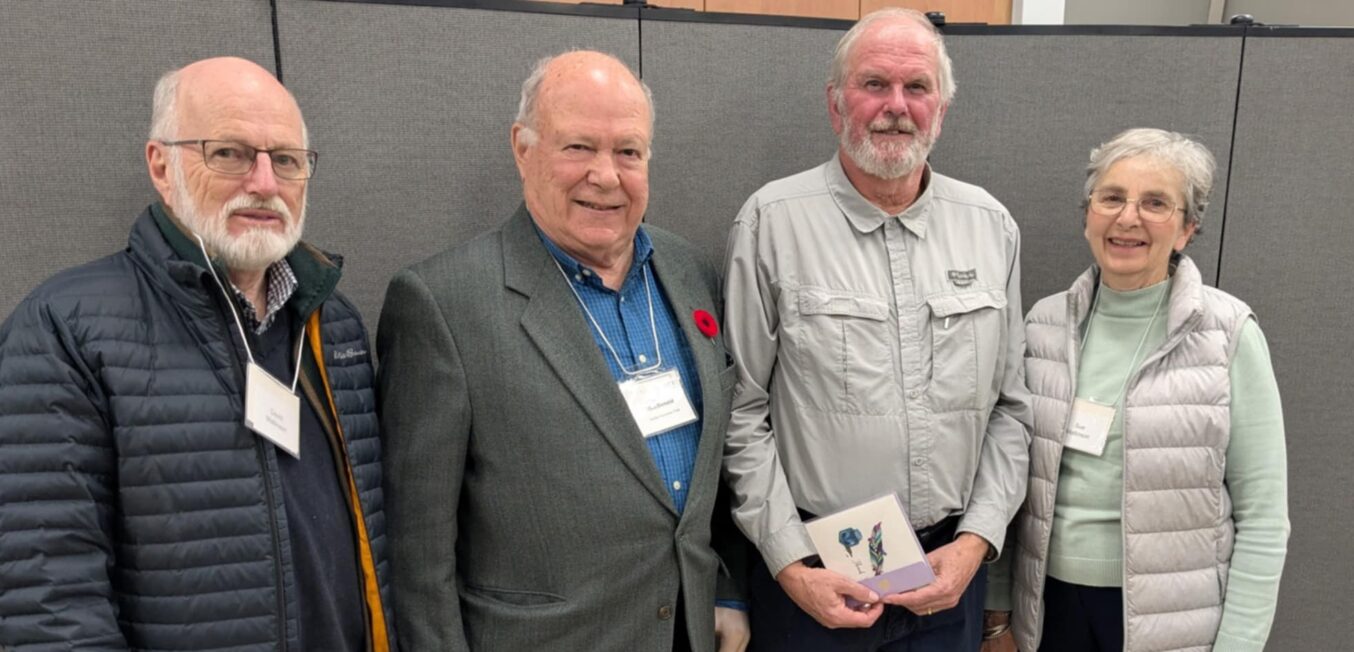
At the Orillia Naturalists’ Club’s November meeting, longtime naturalist and educator David Hawke led an engaging discussion on Environmental Ethics: How Can Everyone Be Right? Through stories, photography, and thought-provoking questions, David invited participants to reflect on how our personal, organizational, and societal ethics shape the choices we make about the environment.
Environmental ethics is the study of how humans relate to the natural world—and how we decide what is “right” when interests conflict. David explored this concept from multiple perspectives, showing how personal values often guide how we see and use the land. For some, a forest might represent a place for recreation and peace; for others, it’s a resource to be managed or a home for wildlife to be protected. Each view has merit, but the challenge lies in finding a balance between them.
At an organizational level, conservation groups face similar ethical questions. Land trusts, for example, must weigh ecological priorities, financial realities, and community needs. Do they focus on saving a rare species’ habitat, restoring a degraded landscape, or creating trails for public access? Every decision requires trade-offs, and these choices are shaped by the organization’s mission, available resources, and the expectations of its supporters.
David also spoke about the broader societal influences that frame our ethical decisions. Laws, cultural norms, and economic systems all affect how we value nature. While society increasingly recognizes the importance of protecting the environment, there remain tensions between growth, convenience, and conservation.
Residents play an important role in navigating these challenges. Whether it’s choosing native plants for our gardens, supporting local land conservation efforts, or advocating for responsible development, individual actions contribute to the ethical landscape of our community. Understanding that ethics are not fixed—but evolve as we learn more about the world around us—helps us make more thoughtful, balanced decisions.
David encouraged everyone to recognize that no single perspective holds all the answers. True environmental ethics requires dialogue, empathy, and a willingness to see multiple sides of an issue. By examining how personal, organizational, and societal values intersect, we can work toward a more sustainable and respectful relationship with the land.
The evening left members reflecting on their own roles in conservation and how ethical considerations guide both everyday actions and broader environmental decisions. As David reminded the group, the path forward is not about being “right,” but about striving to do what’s best—for nature, and for each other.
